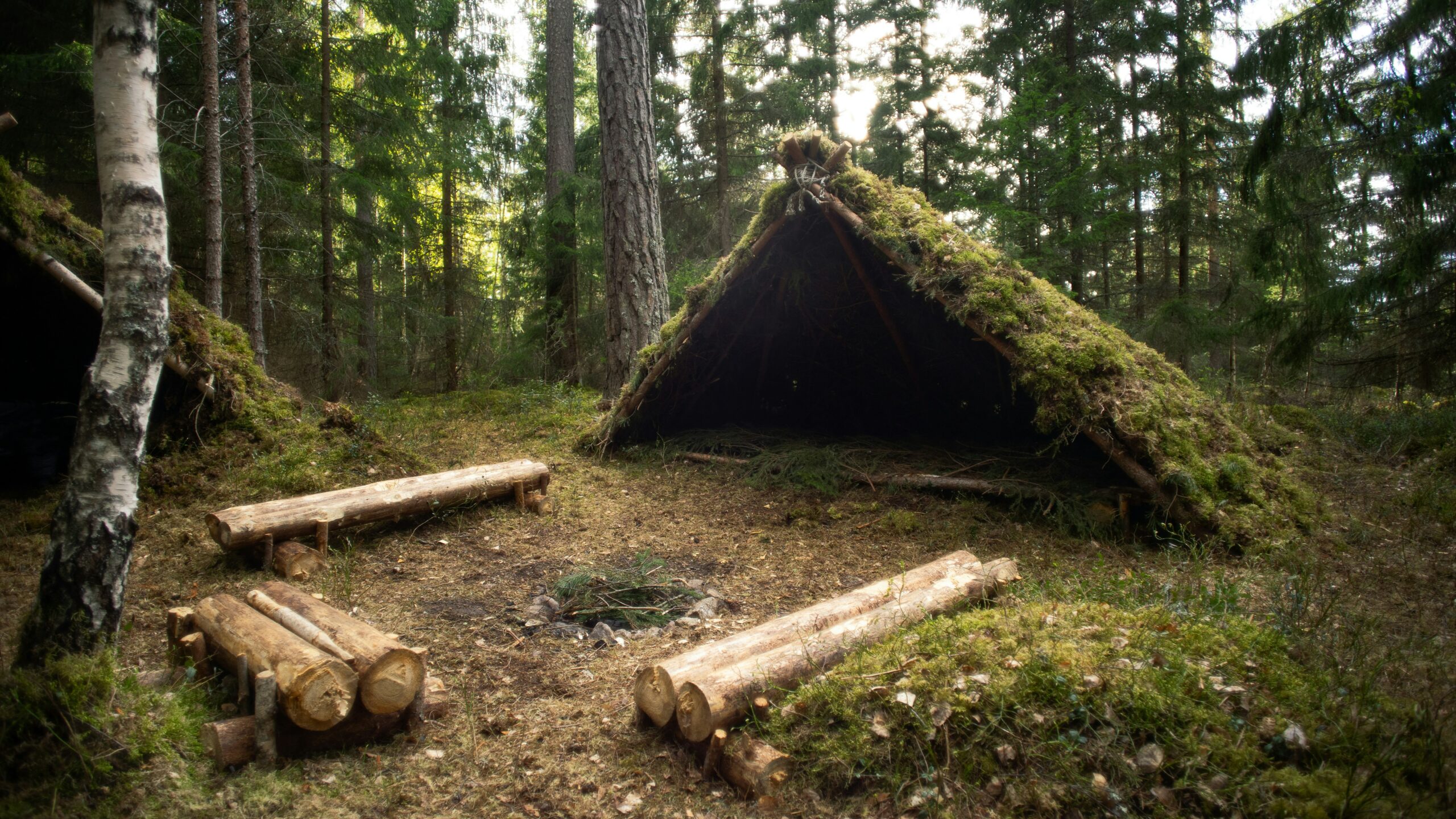
Survival Shelters
There are many different scenarios in which you may need to survive the night outdoors. Making a shelter may be one of the most important aspects of your survival. For this reason I am making it my first post!!
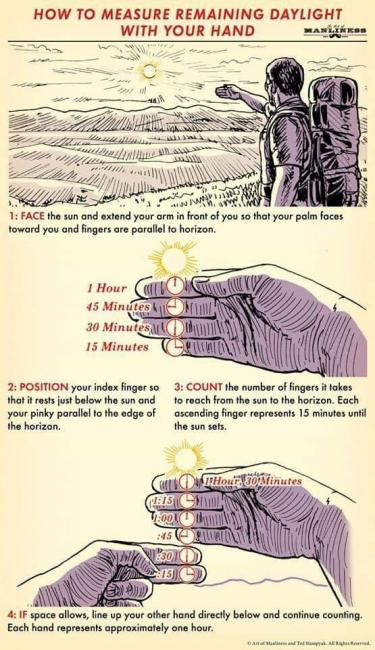
The most likely scenario is getting lost while hiking. Or darkness sets in faster than you thought it would and it’s too dangerous to return the way you came.
Things to think about: how cold is it going to get, is it raining or going to rain? do you have a fire source, do you have food or water? What kind of clothes do you have with you? do you have more layers or a jacket? How long do you think you will need to survive for? Do you know where you are? Does anyone else no where you are??
Some key elements of a shelter are: Shingles, Insulation, Air-proofing and Fire
Shingles can be made of your jacket, a tarp, slabs of bark, large leaves or better yet just set up under a large tree canopy or under a rocky over hang. Try to think about the wind as well as it will take away a lot of your heat. Even just piling forest debris strategically can help keep the rain out.
Insulation is a material that helps keep the heat in. Leaves, moss, branches, and bows. Basically anything light and fluffy. Straw and or grass.
Air proofing along the bottom of your shelter helps keep out the wind and also deflect any heat back inside. Leaves, dirt, bark, sheets of moss can be place in cracks along the base of your shelter.
For our first set of shelters we will assume you were out on a day hike and have some simple supplies with you. Some water, maybe a snack and if you are lucky a knife of some sort. Your probably didn’t bring an axe, saw, rope or a tarp. In a scenario like this your main goal is surviving the night and then hoping to be rescued or hike out the next day. This is not a long term survival situation.
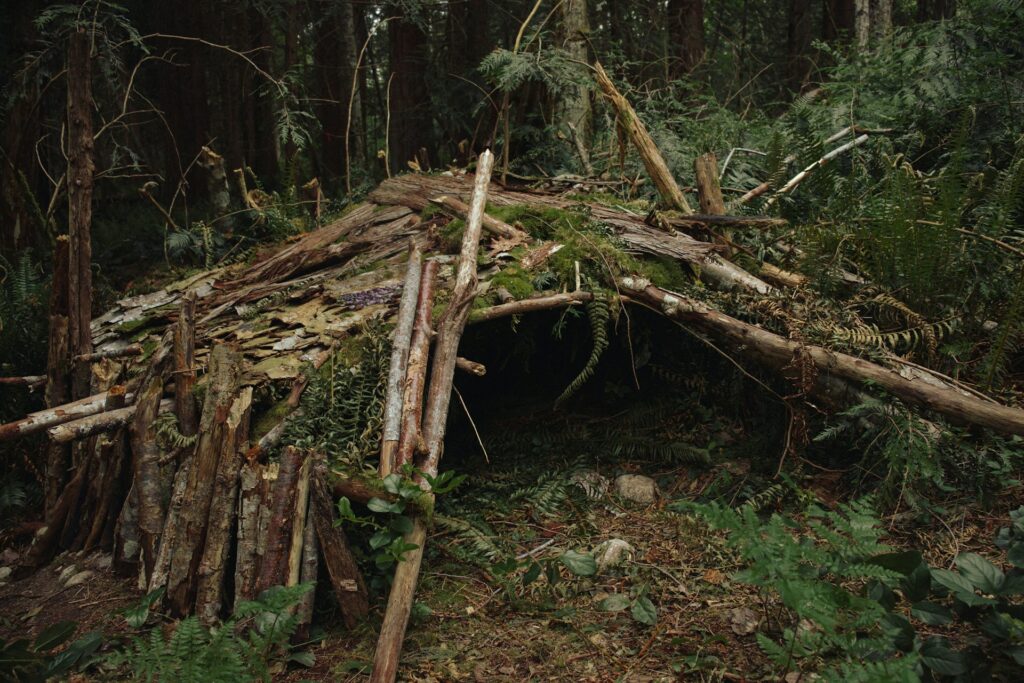
In this type of situation you will be looking for as much help from nature as possible to help keep any rain off and stay out of the wind. So under a big tree canopy or a rocky over hang can be a good start. The most basic setup will be a lean-to of some sort with a bigger log or already fallen tree as your main centre frame piece. Your surroundings and type of forest you are in (types of available branches, moss, leaves or ferns etc) will dictate your implementation. But the basic idea is to have a high side and a lower side. Then lean some smaller branches up against that in order to give a structure that allows the addition of more layers to create insulation or ideally some protection from rain.
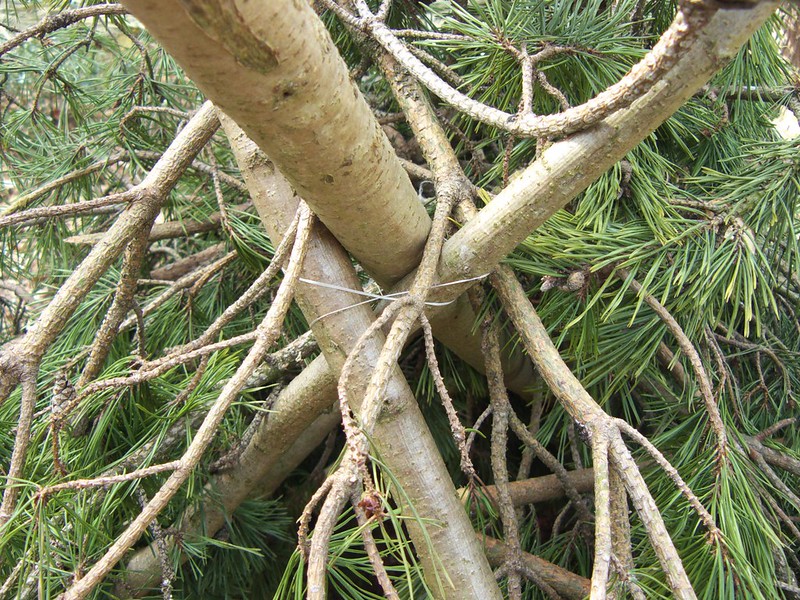
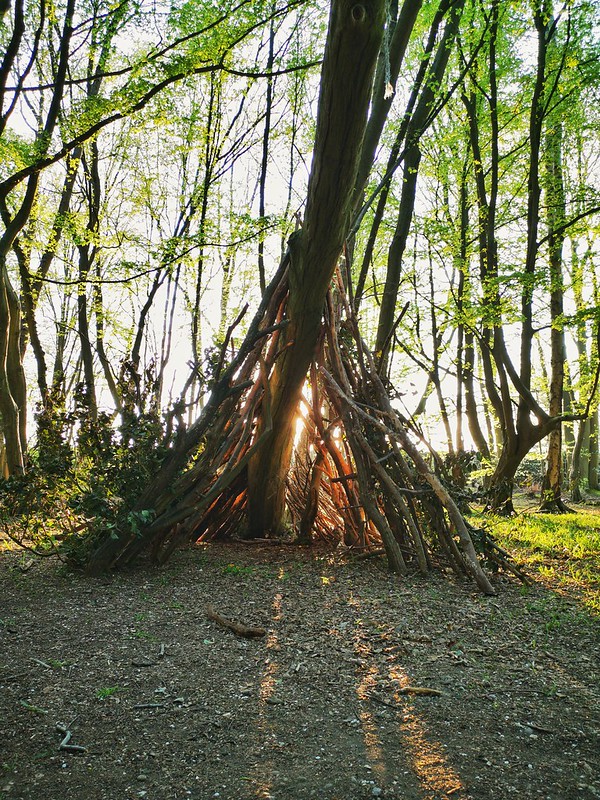
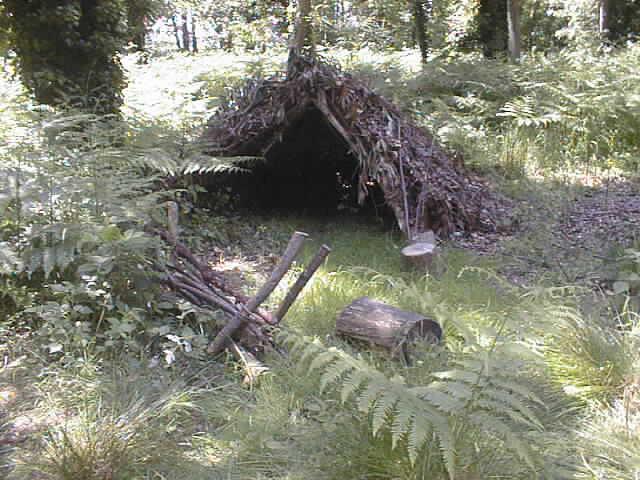
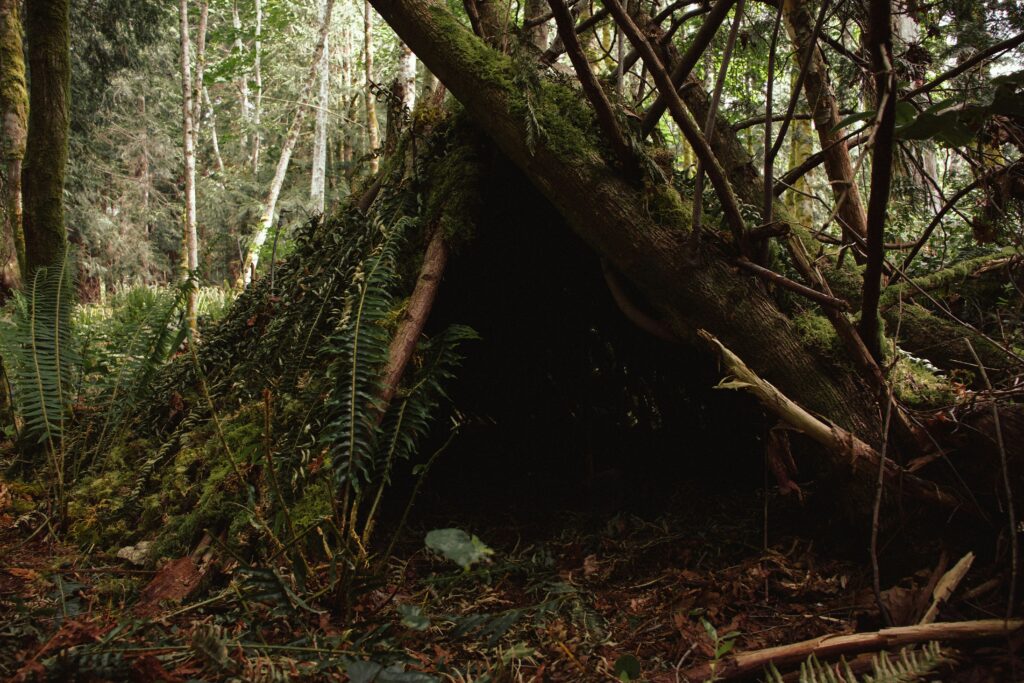
The larger branch can be placed in the V of two trees or on to a larger branch. Smaller branches can be collected and brought into place. For insulation you can use ferns, the bows of trees, moss, tall grass, bull rushes and leaves. For bedding you can use leaves or again bows of trees. Moss is ideal for putting into cracks to help keep out the wind.
Check out this YouTube video with some basic shelter concepts:
Now, if you have a tarp you have more options. The simplest with a tarp is called the burrito..Basically wrap yourself up and hope for the best. You can also make one of the simple structures we have already discussed and utilize your tarp in the design to help keep the water and wind out. If you have rope you can tie it to a tree and then down to the ground or the base of another tree and create a roof for yourself in many different ways.
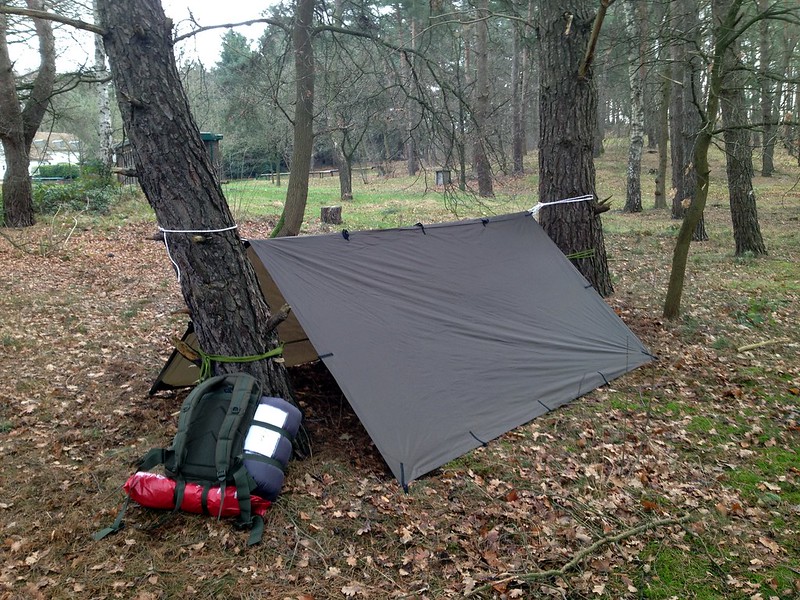
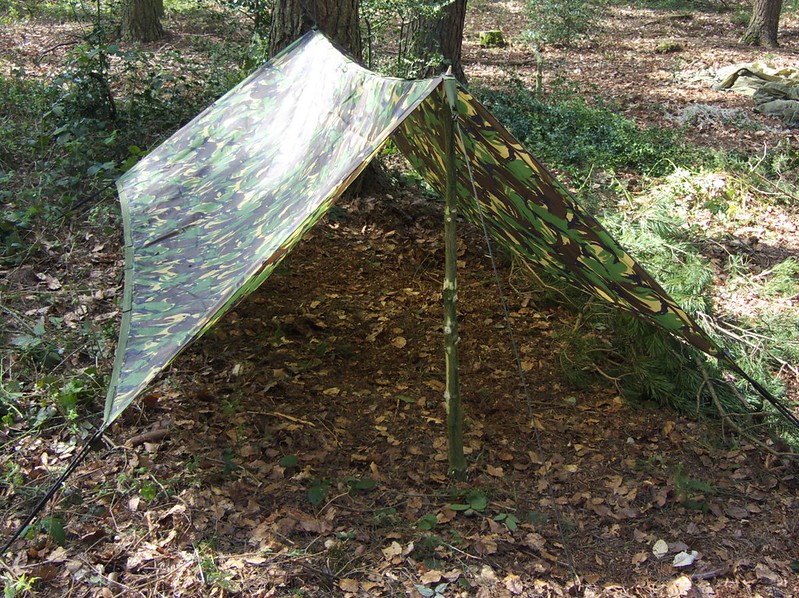
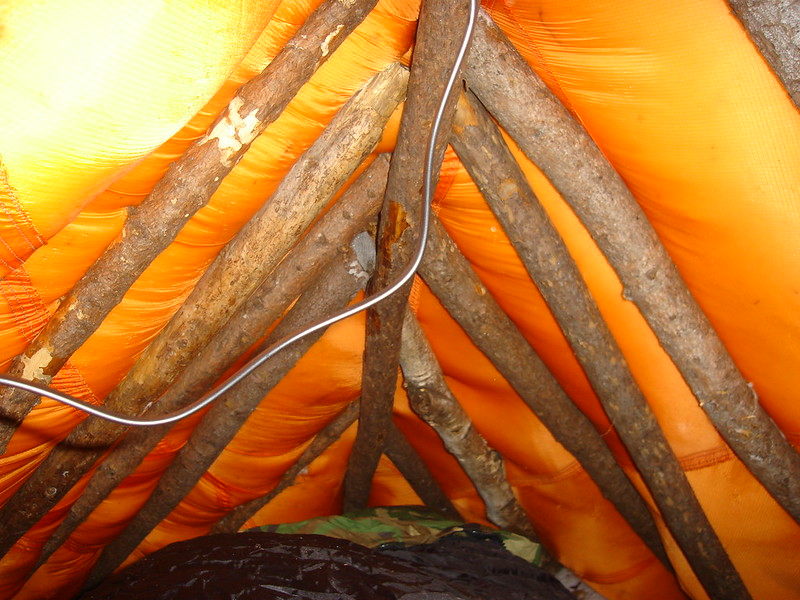
If you have an axe, a saw or a shovel then you can really start to get creative. But these structures become more more involved and are more for long term survival or camping purposes.
You need to be careful of how many calories you are burning if you have no food or water with you. So depending on the situation keeping it simple can be beneficial.
Here are some of my favourite shelter building videos from YouTube.
https://www.theatomicbear.com/blogs/news/survival-shelters-which-type-is-right-for-you